
The cat’s pyjamas of feline research and Optimum F1000Prime
| 7 July, 2017 | Alanna Orpen |

|

|
For June, we paw over the research on our feline companions, as well as highlight the top recommended and Hidden Jewels articles for last month.
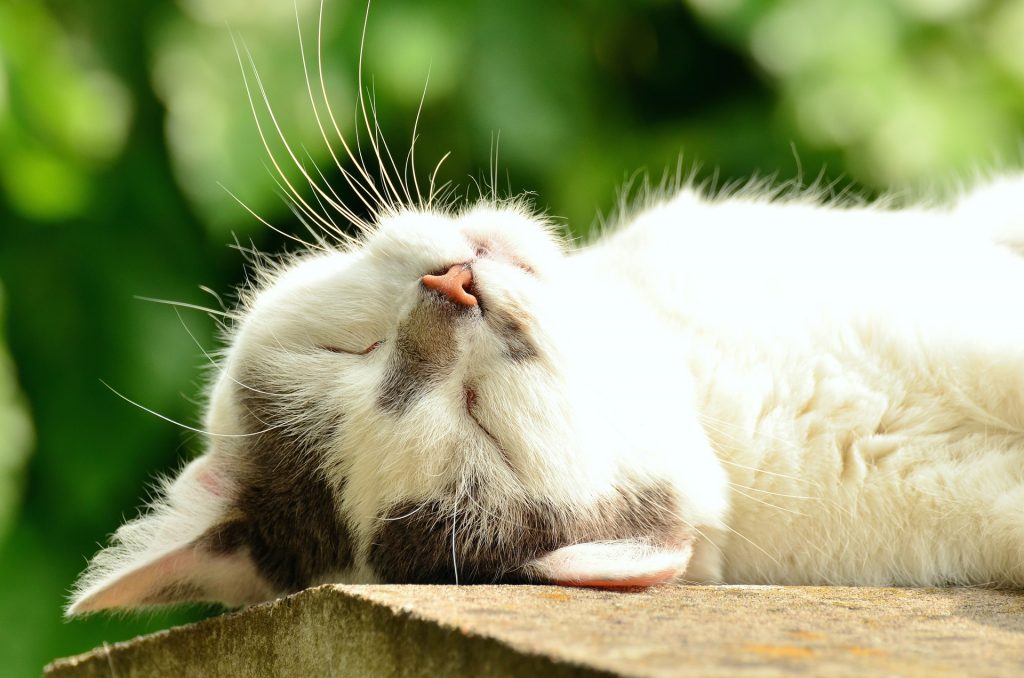
Last month, BBC news reported on a study explaining how cats ‘conquered’ the world. The research published in Nature Ecology and Evolution, investigated the domestication process of the cat, Felis silvestris lybica, and humans’ contribution to its global spread, for cats now live on every continent except Antarctica.
This was discovered from a DNA analysis of over 200 ancient cat remains from Viking graves, Egyptian mummies and Stone Age Sites. This was a ‘purr-fect’ opportunity to paw through our recommended articles and highlight the other revelations made about our feline companions from DNA evidence. We also include our usual top 3 articles for the month and our Hidden Jewels. Click on the images for full access to the recommendations.
F1000Prime is a literature recommendation service. The service has a peer-nominated global Faculty of more than 8,000 of the world’s leading biomedical scientists and clinicians who select those article they think are particularly interesting and important, and write recommendations explaining their selection. From the numerical ratings awarded, we have created a unique system for quantifying the importance of individual articles.
Top 3 article recommendations about feline DNA
“In this ‘sweet study’, the authors find the explanation for cats’ indifference to sweet compounds. This is due to a lack of a functional Tas1R2 receptor.” – Barbara Trask, Fred Hutchinson Cancer Research Center, US
“This paper strongly implicates the non-specific cation channel transient receptor potential vanilloid family member 4 (TRPV4) in one of the many variants of osteochondrodysplasia (disorders of cartilage and/or bone growth), specifically that seen in Scottish Fold cats.” – Ali Mobasheri & Csaba Matta, University of Surrey, UK, and Richard Barrett-Jolley, University of Liverpool, UK
“Comparative analysis of different major histocompatibilty complex (MHC) regions has never failed to produce exciting new insights into the plasticity of the immune system and the analysis of the feline MHC class II region is no exception.” – Stephan Beck, University College London, UK
Current Top 3 recommendations
Rankings are generated using the articles recommended in F1000Prime during the preceding 30 days.
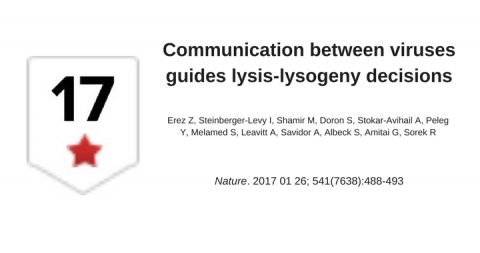
“Erez et al. report evidence that phage communicate via small molecules, thereby influencing cell fate post-infection. This breakthrough discovery addresses a decades-old question: do phage adaptively change their infection strategy at the cellular scale as a function of infection dynamics at the population scale?” – Joshua Weitz, Quantitative BioSciences Georgia Institute of Technology, US
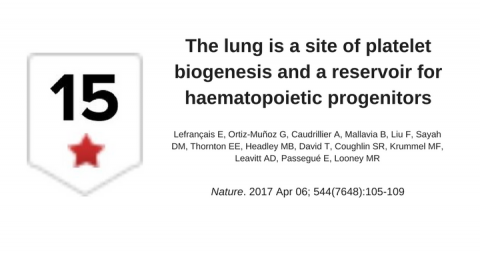
“This very interesting data makes a strong case for a ‘newly’ recognized site of hematopoiesis. With this information, it will be interesting to consider the effects of pulmonary pathology on hematopoietic parameters.” – Eva Guinan, Dana-Farber Cancer Institute, US
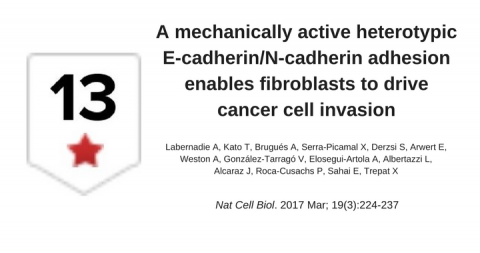
 “In this remarkable paper, Labernadie and colleagues discover how cancer-associated fibroblasts pull carcinoma cells out of a solid tumor and lead them to invade the extracellular matrix.” – Ronen Zaidel-Bar, National University of Singapore, Singapore
Hidden Jewels
Hidden Jewels rankings only include articles published in specialist journals, recommended in F1000Prime during the preceding 30 days.
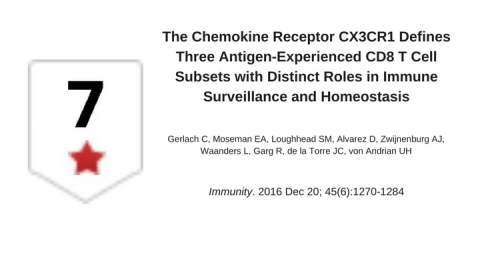
“In this study by Gerlach et al., the authors identify a new recirculation pattern of memory CD8 T cells. In contrast to the well-known migrational behavior of central memory CD8 T cells, which enter lymph nodes via high endothelial venules, a newly identified group of peripheral memory CD8 T cells that express intermediate levels of CX3CR1 enter lymph nodes via afferent lymphatics following migration through peripheral tissues.” – Wolfgang Kastenmüller, University of Bonn, Germany, and Georg Gasteiger, University of Mainze Medical Center, Germany.
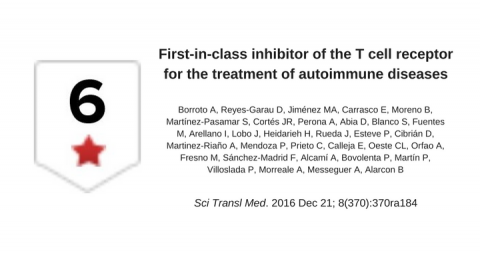
“This article is of exceptional interest because it proposes a novel therapeutic strategy to interfere with T-cell activation by self-antigens without compromising T-cell responses to foreign antigens.”- Margot Thome, University of Lausanne, Switzerland
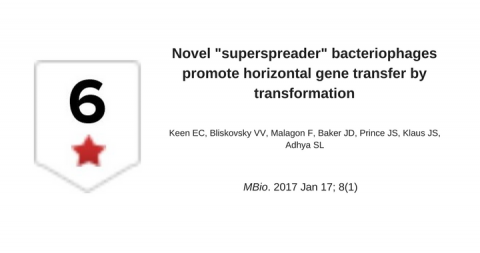
 “Despite the natural scope of transduction for gene transfer among bacteria, phages only transduce within their own host-range. The findings in this paper report two new phages whose activity permits uptake of bacterial DNA from lysed cells by neighbouring bacterial cells.” – Aidan Coffey, Cork Institute of Technology, Ireland
|
|


 previous post


User comments must be in English, comprehensible and relevant to the post under discussion. We reserve the right to remove any comments that we consider to be inappropriate, offensive or otherwise in breach of the User Comment Terms and Conditions. Commenters must not use a comment for personal attacks.
Click here to post comment and indicate that you accept the Commenting Terms and Conditions.