
Not just about research availability
| 7 July, 2011 | Richard P. Grant |

|

|
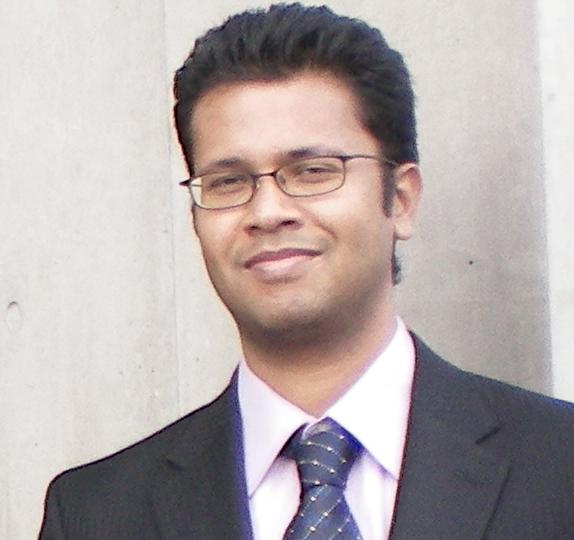
What’s in a name? At the BioMed Central awards in spring I had the pleasure of meeting Ravi Murugesan, AuthorAID Training Coordinator at the Oxford-based International Network for the Availability of Scientific Publications (INASP). Because his work may interest some of our readers, I asked him to write a guest post for us. Here it is.
My colleague recently presented the results of a survey on what people think about our organization’s brand. One question was about what they could understand from our name. Their responses were simply literal interpretations of our name. While that was disappointing for us–no organization likes to be assessed in such a superficial manner–it was not really surprising: we have a rather long name that could give the impression of describing us fully.
I work at the International Network for the Availability of Scientific Publications (INASP). Until I joined INASP a few months back, I too thought that much of INASP’s work is about making scientific publications available to different countries. It took me a few weeks to understand that INASP is focused on the entire research cycle in developing countries.
For research to be meaningful, it should be available, accessible, created, and put to use. Research may be available somewhere, but unless researchers know about it and how to get to it, it’s not really accessible. We work on making journals available to our partner countries at a subsidized price (only 20% of worldwide research is available via open access), and we help libraries in those countries enable researchers to access those journals. Last year, we obtained substantial discounts or subscription waivers from 50 international publishers for our partner and network countries. To improve research accessibility, we organized information literacy events that were attended by a total of 2,200 participants in several countries in Africa and Asia.
Researchers don’t become happy just because research is available and accessible. They want to–or need to–publish themselves. To help them publish, we conduct workshops on research writing. These are mainly for early-career researchers who have not yet published in peer-reviewed journals. Our work seems to be having long-term impact: following a workshop on research writing at the National University of Rwanda in 2009, the participants have published 70 papers in peer-reviewed journals and made 15 conference presentations. Another area of our publishing support programme is our ‘journals online’ project, through which we help with the set up and operations of national journals in our partner countries such as Sri Lanka, Nepal, and Vietnam.
Outside laboratories and universities in developing countries, research and academic publication are sometimes seen as oddities that are not relevant in the real world. To increase the uptake of research and for it to be seen as a credible source of information, we conduct training programmes for parliamentary staff on how to use research publications in their policy making. The feedback from a parliamentary staff member in Ghana indicates the potential impact of this training: “Science has been demystified–in particular as a result of the session on science publications. I work with the woman’s caucus who are interested in maternal mortality. Now I know sites I can go to.”
One of our efforts to make our work sustainable is the cascading workshop methodology. We usually include ‘train the trainers’ sessions within a typical workshop for participants who are interested in sharing their knowledge, and such participants are usually the majority. We encourage them to conduct workshops on their own and use our freely available training materials. Within our AuthorAID project, we also have grants to fund such workshops.
Availability, accessibility, creation, and uptake of research publications: it wouldn’t be a good idea to have all these words in the INASP name, or even in a tagline. So maybe we have to live with the name we have.
Now, a non-commercial break: if you’re a published researcher, consider joining our AuthorAID website as a mentor. Early-career researchers from developing countries have published or presented over 100 papers as a result of our mentoring scheme. Most of the 3000 people who’re registered on our website are mentees, and we’d really like more mentors from different research fields to join us.
 For more information, please visit www.inasp.info and www.authoraid.info.
Ravi Murugesan is the training coordinator in the AuthorAID project at
INASP. He facilitates workshops on research writing in developing
countries and is developing an e-learning system.
|
|
 previous post

