To mark World TB Day, we launch a collection that we hope will grow over the coming months to highlight the results of could help influence decisions taken by leaders during this year’s UN General Assembly. We also speak to one of the advisors for the collection – Helen Fletcher from London School of Hygiene and Tropical Medicine.
Anisa Rowhani-Farid and Adrian Barnett recently published the second version of their Research Article in which they compared data-sharing in two journals and whether badges had an effect on sharing. In this guest blog, Anisa Rowhani-Farid describes what motivated her in her work and the results of her research.
Lenny Teytelman, co-founder of protocols.io, tells us how reproducibility is supported by scientists sharing their methods on protocols.io. We also get some insight into the early days of protocols.io and conversations he had with key players at F1000.
The next few months will bring some exciting developments to F1000Prime. We are evolving and redesigning our website and service, to reflect the changing nature of science and to more fully support researchers in discovering the articles that really matter to their research.
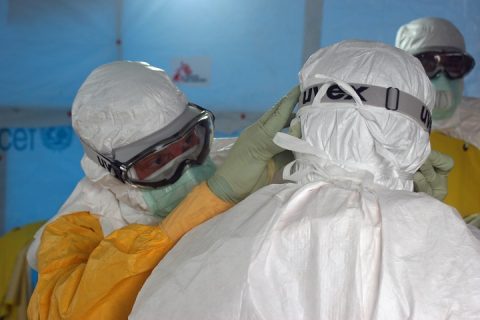
In her recent Research article published on F1000Research, Saskia den Boon and colleagues surveryed health workers around personal protective equipment during the West Ebola outbreak in 2014-2015. In this guest blog, Saskia describes the findings of this survey and how they were used to inform WHO guidelines.
Last summer we launched our interactive figures initiative with plotly. Since then, we have published 22 interactives figures in seven articles across two platforms. In this post authors describe their figures and share why they wanted to make them interactive.
The AAAS Annual Meeting takes place in Austin from 15 to 19 February and F1000 will be there. We will try to get to the heart of open science while deep in the heart of Texas. We will be moderating a panel that will include perspectives from a researcher, Charles Lin, Baylor College of Medicine; a funder, Ashley Farley, the Bill & Melinda Gates Foundation; and a publisher, Sabina Alam, F1000. We get some insight into their views on open science.
‘Hey, hey, we’re the Monkeys, And people say we monkey around’ – you might have seen the recent photos and videos of Zhong Zhong and Hua Hua, as pictured above, the identical pair of macaques playing around and cuddling soft toys. What’s special about these macaques is that they are the first cloned monkeys, born several weeks…
A study published in F1000Research found that short-term group body psychotherapy had a positive effect on a small group of cancer patients. The group participants attended 6 sessions. In this blog, the authors discuss what the sessions involved and how the patients profited from them, attaining new insights into their perceptions of their body and the relationship between their feelings and their body.
Perfectionism is a hidden epidemic among young people, and striving to be flawless could have negative effect on their mental wellbeing, causing the rise seen in depression, anxiety and eating disorders. We share the recommended research related to these issues, as well as our top 3 recommendations and our hidden jewels.