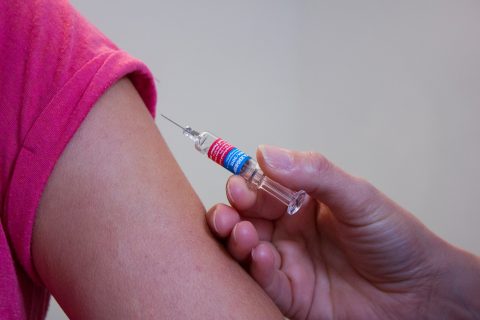
Veljko Veljkovic, Biomed Protection, and Slobodan Paessler, Galveston National Laboratory, have published articles on F1000Research in which they predicted the effectivemess of the flu vaccine in 2017/2018 and 2018/2019. In this guest blog they explain how they went about this and how accurate their predictions were.
Late last year, we published the first Stage 1 Registered Report on F1000Research. Publishing Registered Reports is believed to increase the rigor around the scientific method, which supports reproducibility. We interviewed the lead author, Julius Emmrich, Charité, Germany and one of the article’s reviewers, Ádám Dénes, Institute of Experimental Medicine, Hungarian Academy of Sciences, to get an insight into their views on this way of improving experimental design.
This month we share the recommended research on depression as researchers’ genetic map for the mental health condition could pave the way towards new and improved therapies.
Giampaolo Perna, Humanitas University, Italy, is a psychiatrist who has focussed his research on panic disorders. In a recent Faculty Review, he and his co-author, Daniela Caldirola, present a new hypothesis about the pathology of panic disorder. In this guest blog he elaborates on this and the evidence needed to prove this hypothesis.
Anuj Sharma talks about his research on miltefosine and its potential use as an anti-chikungunya drug.
We announce a new partnership with NC3Rs to launch a gateway that will maximise the impact of the 3Rs – replace, reduce or refine – technologies and approaches in animal research. In this guest blog, Vicky Robinson, Chief Executive of NCR3Rs, introduces the new NC3Rs gateway
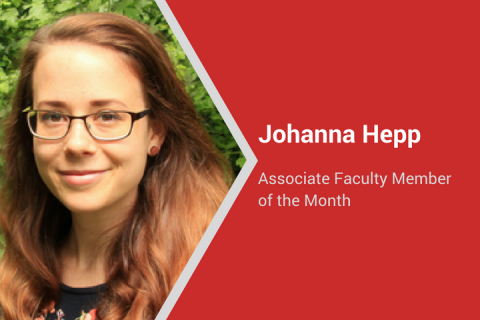
Johanna Hepp, is May’s Associate Faculty Member of the Month. In recognition of Mental Health Awareness Week, we interviewed Johanna to discuss her research on social cognition and Borderline Personality Disorder.
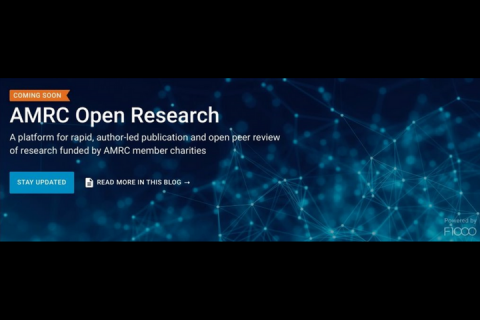
Rebecca Lawrence, Managing Director of F1000 announces our partnership with the Association of Medical Research Charities (AMRC) to provide a publication platform for 23 of their UK-based medical research charities.
A couple of our Faculty Members discuss William Kaelin’s opinion article, a piece that highlights the problematic trend that has crept into scientific publication and was F1000Prime’s top recommended article for six months running. They share their thoughts on what could be done to improve the future of scientific research.
Emily Hesketh, a postdoctoral fellow at the Wellcome Sanger Institute, discusses her research note published on F1000Research about a method to improve communication between specialists in interdisciplinary teams.