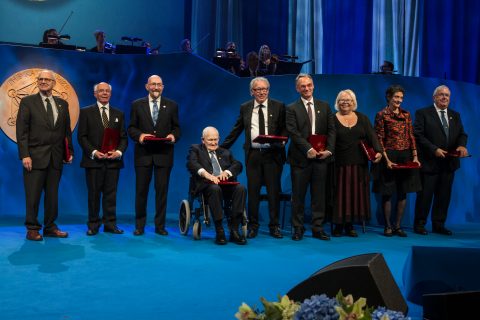
Congratulations to our Head of Neuroscience Faculty, Carla J Shatz, who has won this year’s Kavli Prize in Neuroscience. She shares the prize with Eve Marder, former Faculty Member of the Neuronal Signaling Mechanisms Section, and Michael M Merzenich ‘for the discovery of mechanisms that allow experience and neural activity to remodel brain function.’
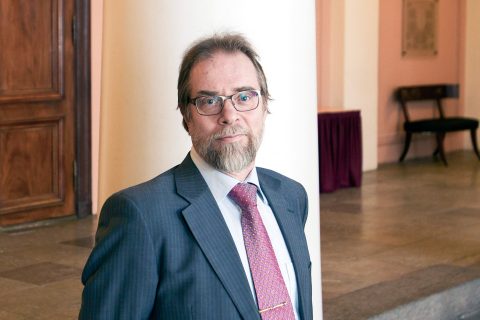
I am delighted to have been selected to serve on the High-Level Advisory Group ‘Open Science Policy Platform’ (OSPP) at this important juncture in the EU’s vision on bringing open science to the way research across the EU is conducted and communicated. At the Dutch Presidency’s Open Science conference in Amsterdam in April, European Commissioner Carlos…
Recently, we published a slide set that was presented during the International Zika Summit held at the Institut Pasteur, Paris on April 25-26 2016 which explores collaborative data sharing in outbreak situations. We reached out to the authors and are delighted to have them write a guest post for us to discuss a possible way…
F1000Research has partnered with Kudos, a free service that provides researchers with simple tools to maximize the reach and impact of their published articles. We want to help ensure that research reaches the widest possible audience. The service is suitable for all academics, including those who are not already active on social media and might welcome…
We were sad to learn that Ilkka Hanski, Head of the Ecology Faculty, passed away on May 10th after a long illness. Dr Hanski joined F1000 as a Faculty Head in 2004. He was a highly renowned and widely cited ecologist, considered the father of metapopulation theory. A leading researcher in ecology and evolutionary biology, Ilkka Hanski was…
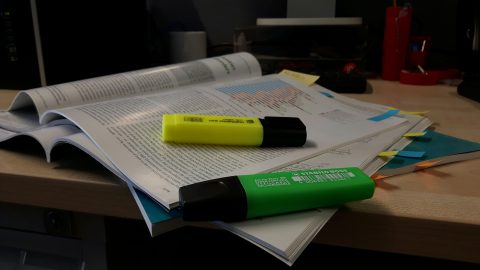
If you peer back through the mists of time – back to the last century – and picture an academic, it is likely her office would be full of journals, papers covered in post-it notes, highlighters and unwieldy scribblings in the margins. You may not, though, need to look so far as you probably know lots of labs and offices like this today. The evolution of technology has dramatically changed our world, but it seems to have bypassed many of our community.
On 20 and 21 May MSF Scientific Day in London will kick off three events presenting research from the MSF field programs around the world. MSF Scientific days showcase how the organisation/charity is pushing to improve the effectiveness of medical humanitarian aid and raise awareness of the fight against neglected diseases. As well as the…
Have you ever wished your workplace would be a more social place? A place where, sure, you have to work hard, but you can also have a chat or a laugh with people you like being around? Below are several ideas to help you transform your lab into a nicer place to spend your time.…
Each month we scan our poster and slides submissions and feature one as our ‘poster/slide of the month’. April’s choice is: “The Type 2 Diabetes Knowledge Portal: accelerating type 2 diabetes research through community access to human genetic information and tools”. It was presented by Maria Costanzo, from the Broad Institute, at the 9th International…
In response to rising concerns about irreproducible science and the lack of somewhere to openly discuss these issues, we recently launched the Preclinical Reproducibility and Robustness Channel. Our aim is to provide a place to publish confirming and non-confirming studies with the full methodologies and underlying data being made available. We want the channel to…