
F1000 Faculty Awarded the Brain Prize
| 3 March, 2016 | Kinga Hosszu |

|

|
The Brain Prize, awarded annually by the Grete Lundbeck European Brain Research Foundation, recognizes one or more scientists for their outstanding contribution to neuroscience, and is widely regarded as the equivalent for the Nobel Prize for neuroscientists. 2016’s Brain Prize is shared by three winners, and we’re delighted to congratulate F1000 Faculty Member Graham Collingridge, Section Head Richard Morris, and former Faculty Member Tim Bliss. They receive the award for uncovering the basic mechanisms behind Long-Term Potentiation and for demonstrating that this form of synaptic plasticity is the basis for our ability to learn and form memories.

Graham Collingridge joined the F1000 Cognitive Neuroscience Faculty in 2008. He is professor of neuroscience in anatomy at the University of Bristol, chair of the department of physiology at the University of Toronto and senior investigator at the Lunenfeld – Tanenbaum Research Institute of Mount Sinai Hospital, Toronto, Canada. His research focuses on the mechanisms of synaptic plasticity in health and disease, in particular, understanding the molecular basis of synaptic plasticity and how pathological alterations in these processes may lead to major brain disorders, such as Alzheimer’s disease.
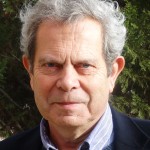
Richard Morris has been one of the Heads of the Cognitive Neuroscience Section (along with Leslie Ungerleider) of F1000’s Neuroscience Faculty since 2001. Dr. Morris is a professor of neuroscience at the University of Edinburgh. His work focuses on the role of activity-dependent synaptic plasticity in memory formation and consolidation. His current projects include optogenetic investigation of neuromodulation of cellular memory consolidation, and the role of prior knowledge, particularly ‘schemas’, in systems memory consolidation. His lab is investigating the relevance of these ideas with respect to memory enhancement and the development of novel therapeutics for Alzheimer’s Disease.
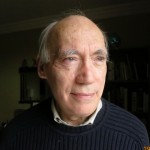
Tim Bliss was part of the F1000 Faculty in Cognitive Neuroscience from 2003 – 2006. Dr. Bliss is a Fellow of the Royal Society, and of the Academy of Medical Sciences. He shared the Bristol Myers Squibb award for Neuroscience with Eric Kandel in 1991, and the Ipsen Prize for Neural Plasticity with Richard Morris and Yadin Dudai in 2013. Currently, he is a visiting professor at University College London, and at the Frontier Institutes of Science and Technology, Xi’an Jiaotong University, Xi’an, China. His research interests include the neural basis of learning and memory, with particular reference to the mechanisms and function of long-term potentiation in the hippocampus.
A press release by the Brain Prize, detailing all the recipients, can be read here. Our congratulations again to all three of them!
|
|
 previous post


