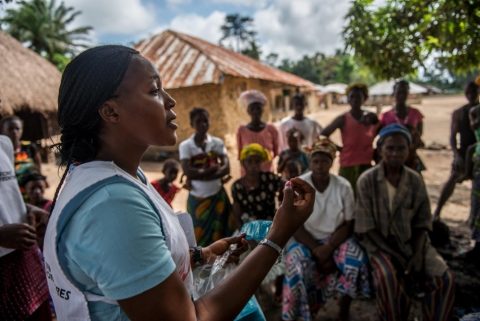
MSF Scientific Days this year was held at the Royal Society of Medicine in London. This conference brings together researchers from around the world to showcase their medical research. Similarly to last year, the conference was split into two parts: Medical Research and Innovation. Three members of the editorial team at F1000Research, Christina Tang, Theo Isaac and Molly Cranston, had the pleasure of attending MSF Scientific Days and provide a brief overview of what was discussed.
On Friday and Saturday this week, the 14th Médecins Sans Frontières (MSF) Scientific Days programme will kick off in London at the Royal Society of Medicine. These events are followed by a day in New Delhi, India on May 27th and in Blantyre, Malawi on June 22nd. Sarah Venis from MSF lets us know what we can expect at the London event
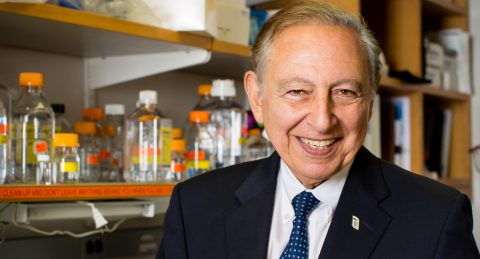
Today is annual World AIDS Day: an opportunity for people worldwide to unite in the fight against HIV, show their support for people living with HIV and to commemorate people who have died. We spoke to one of the Heads of our Infectious Diseases Faculty, Dr. Robert C. Gallo, who became world famous in 1984 for the co-discovery…
Since the first reports of AIDS, approximately 36 million people have died from the disease, with an estimated 35 million living with HIV. Drug therapy consists of HAART, highly active antiretroviral therapy, which slows progression of the disease and lessens risk of death. Today, researchers are closer than ever to finding a functional cure and…
This is a guest post from Terrapinn, a company that organizes healthcare conferences, on the discovery of a protein that could be the crux for HIV prevention. They will be hosting the the Cell Culture World Congress USA (November 12-13, 2012).
Did you catch the vaccine issue of The Scientist? It features F1000 Members Robin Weiss and Gene Shearer (with Adriano Boasso), writing about the history and future of vaccination and an unusual but potentially effective alternative vaccination strategy.
On Monday we reported on a trial showing that early retroviral treatment can protect partners of HIV-infected individuals. The findings are so good that the data were released early by the interim review board. This must put a smile on the face of Anthony Fauci, who has made great contributions to understanding how HIV destroys…
Look on my works, ye mighty, and despair The International Science and Engineering Visualization Challenge was created by the National Science Foundation (NSF) and Science to celebrate the tradition of science illustration—from Leonardo da Vinci to the present day—and to encourage its continued growth and relevance. There are categories in Photography, Illustrations, Informational Posters and…
Critical differences between the human immune system and that of other primates, such as chimpanzees and rhesus macaques, lead to humans being more susceptible to a number of infectious agents including HIV and malaria. Now, the first genome-wide functional comparison in chimps, macaques and humans reveals changes in immune system gene expression that could explain…
NIH: It’s all about significance, approach Under the revised peer review system, significance and approach are the two most important core review factors used to determine the overall impact score of a NIH grant application, according to an analysis by National Institute of General Medical Sciences (NIGMS) director Jeremy Berg at the Institute’s blog on…